The Equation for Reading Success
Parent or Teacher + Effective Materials = Reading Success
The Equation for Reading Success Has Two Critical Components
#1 Parent or Teacher (the teaching)
#2 Effective Materials (the program, tools)
To solve the equation (achieve reading success for all students) both elements are critical.
If you are missing one part of the equation, reading success will not be achieved by many students.
- Loving parents and wonderful teachers frequently fail to achieve reading success simply because they are using ineffective materials and programs. If you are not using effective materials, many children will experience reading failure. The proof is in the results and statistics. Loving parents and wonderful and highly skilled teachers have significant failure rates in teaching children to read when they use ineffective methods.
- Effective materials sitting alone will not ‘teach’ a child how to read. If you don’t have an actual caring competent person doing a good job teaching, the effective materials are worthless and the student will not achieve reading success. The parent or teacher must still TEACH the effective program to the child. Reading success absolutely requires teaching the student.
All the following comments address the use of effective materials part of the equation, NOT the parents/teacher side of the equation. The deficiency that causes the significant reading problem in this country is NOT with the parents and teachers but with the ‘materials’ side of the equation. High rates of students failing to achieve reading success are caused by the widespread use of ineffective programs and materials. To improve reading proficiency rates in this country we MUST start using effective material. We need to use the effective direct systematic phonics programs that are proven by research to be the most effective way to teach children to read.
The Current Situation with Reading Proficiency
Unfortunately, most students in this country fail to learn how to read proficiently. In 2019, 65% of the 4th graders in this country were NOT at the proficient level with an alarming 34% below the basic level.[1] The 8th grade reports show similar rates. [1] The 2019 National Assessment of Educational Progress (NAEP) Reading Report Card www.nces.ed.gov/nationsreportcard/reading.

A Bridge Construction Engineering Analogy

A Bridge Construction Engineering Analogy:
The following engineering analogy can be used to describes the reading failure rates. What if we experienced a situation where only 35% of the bridges functioned to capacity (proficient) and routinely bridges were failing 65% of the time (below proficient) with 34% complete collapse (below basic) and 31% limited capacity (at basic) where you could walk over the bridge but not drive over it.
This alarming situation of bridges completely failing and not functioning to capacity would not be acceptable and would be addressed: Engineers would immediately stop and evaluate the design blueprint/design and the construction of the bridge to determine the exact problem. Now, assuming you have a capable crew constructing the bridge you would carefully evaluate the blueprint and construction materials to see what was causing the problems. A faulty blueprint & inferior materials will result in failure even with the hardest working, most experienced, dedicated crew built the bridge.
To Achieve Reading Success, We Need to Change from the “Failed Blueprint & Faulty Materials” and use Effective Direct Systematic Phonics
Unfortunately, in our education system, we have significant failure rates in children learning to read. The problem is not the hard working, experienced, dedicated crew of teachers and parents. The problem is the faulty blueprints and inferior construction materials. Yet, the educational system continues to use and frequently defend the old blueprints and inferior building materials. To prevent the existing significant failure and achieve high rates of reading success, we must toss out the old faulty blueprints and replace them with blueprints that are proven effective. The validated research and neuroscience shows us the blueprints that actually work to achieve reading success. It is past time to actually use these ‘blueprints’ of effective direct systematic phonics programs. Parents, teachers and other educators need to look at the hard facts (not the opinions, theories, philosophical debates or significantly the marketing claims of commercial curriculum companies that profit greatly from selling their ineffective materials) and learn more about the science of reading and the proven effectiveness of direct systematic phonics programs in teaching children how to read.
Proficient reading is complex; most children need direct systematic phonics instruction to insure they develop necessary phonologic processing pathways. This is especially true for the children at greatest risk for reading failure. The reason WHY direct systematic phonics programs are most effective is they directly and intentionally help the child develop the phonological neural processing pathways that are essential for proficient reading. When children are first learning to read, we can’t ‘see’ the neural processing pathways they are using. However, by teaching them with effective direct systematic phonics programs we can ensure they activate these proficient reader pathways. The downfall with other approaches to reading (the “failed blueprints & inferior materials’) is while they may work for some children, they allow and even encourage many children to use incorrect alternate processing pathways. We help ensure all students achieve reading success when we use direct systematic phonics programs to intentionally develop proficient phonologic processing pathways
Learn more about the proven effectiveness of direct systematic phonics & effective reading instruction. This effective reading instruction blueprint provides the effective materials part of the equation so more students achieve reading success.
- See the article Direct Systematic Phonics Instruction Proven Effective – Why Parents & Teachers Should Use Direct Systematic Phonics
- Explore some of the valid evidence based research findings at Key Reading Research Findings on Teaching Reading & the Neuroscience of Proficient Reading.
- Click on this linked page to listen to or read the series informative reports from APM about teaching students to read.
Reading Instruction with an Effective Materials
Teaching Reading One-on-One: The ideal situation is to teach reading one-on-one by a parent, teacher or other caring adult. The one-on-one attention is the ideal arrangement for teaching a child to read. The individual attention can maximize the child’s learning. You directly see what he fully understands or what he might need a little more practice with. You can continuously alter the presentation to meet the child’s exact rate of learning. Sitting next to a child, you can focus instruction down to the little details and maximize learning. In addition to being very effective and efficient, the one-on-one instruction is also very enjoyable, especially when you are teaching your own child or a student that really needs the extra attention. Teaching your own child at home or another child in a one-on-one tutoring or pull-out situation does not require special training or expensive material. Teaching a child to read in this ideal arrangement only requires a caring literate adult, an investment of time and use of effective instructional materials.
Teaching in a Classroom Situation: Classroom teaching is an entirely different situation than teaching a child one-on-one. Classroom teaching absolutely does require special training. The ever-present complexities and challenges of dealing with a diverse group of children in a classroom setting greatly complicate reading instruction. A classroom teacher faces multiple complex challenges before you even begin to teach a naïve child how to read our complex language. In a classroom, you have 20+ students at different levels, with various backgrounds and different rates of learning. Then you toss in the child whose parents are going through a divorce, the child who didn’t eat breakfast, the child whose dog died the day before, and the child who was sick and missed all last week…. and that may be an easy day when you don’t have some other distraction. These complexities and challenges make it even more important for classroom teachers to be using the most effective materials. With all these challenges and complexities, there is no room for instructional materials and methods that inadvertently allow the student to get on the wrong track. In a one-on-one you have the opportunity to make sure the child actually understands and is doing what they need to be correctly. In a complex group situation, you usually do not have this luxury. To achieve the highest success rates in teaching children how to read our complex written language, classroom teachers must use the most effective and efficient materials available. Even with the most effective materials, classroom teachers still face the multiple challenges and complexities. The simple straightforward part of the equation is the effective materials and methods. The use of science and research proven methods can easily solve the materials half of the equation. The other much more challenging part of teaching absolutely requires the skill and expertise of a ‘good’ teacher.
Improving Reading Proficiency Rates ~ Solving the Equation to Achieve Reading Success
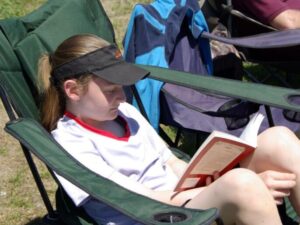
Improving Reading Proficiency Rates: To improve reading proficiency rates we must apply the science and valid research and use effective materials. Parents can begin by teaching their own children to read proficiently (and hopefully finding and teaching at least one other child to read.) Teachers and schools need to use research proven effective methods. Our educational system must make a fundamental shift to effective methods. This is a challenging considering the majority of universities train the teachers in ineffective approaches. Most professionally trained and highly qualified teachers have never been taught the science of effective reading instruction. They continue to be given faulty blueprints. In addition, much of the education system is funded and driven in part by the big curriculum publishing companies that produce, sell and have deep ties to the ineffective materials. Change is always hard. However, the switch to direct systematic phonics is necessary. The current situation where close to two-thirds of the students in this country cannot read proficiently and one-third can’t read at even a basic level is absolutely unacceptable. We have the tools to solve this country’s significant rate of reading failure.
Parents and teachers using effective instructional materials and programs can solve this country’s significant reading problem. It is time to grab the effective blueprint and get to work. We can improve reading proficiency rates, starting with one child, one parent, one teacher, one classroom, one school at a time. We can make a difference and ensure our children achieve reading success.
Right Track Reading is on a mission to empower parents and teachers with information and resources to lead their children or students to reading success. Learn more about how to directly help your child achieve reading success. EXPLORE FREE READING INFORMATION.
If you are ready to learn more about the effective, easy-to-use and affordable tools to directly help your child or student achieve reading success preview Right Track Reading Lessons (designed for younger children) and Back on the Right Track Reading Lessons (specifically targeted for older struggling readers 3rd/4th grade to adult). Translating the science and evidence-based research into actions YOU can use with your student!
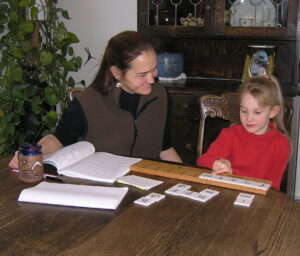
Empowering Parents & Teachers with information to help their children and students achieve reading success!
This article was written by Miscese Gagen, a mother with a passion for teaching children to read proficiently by using effective methods. She is the author of the effective reading instructional programs Right Track Reading Lessons and Back on the Right Track Reading Lessons as well as a reading tutor with over 20 years’ experience successfully helping her students build proficient reading skills. The purpose of this article is to empower parents and teachers with information so they can help their children achieve reading success. We CAN improve reading proficiency, one student at a time! More information is located at www.righttrackreading.com This article was written in 2005 and updated in 2021. ~ Copyright 2004-2021 Miscese R. Gagen