Quick Phonemic Awareness Evaluation
Free Phonemic Awareness Evaluation Tool for Parents
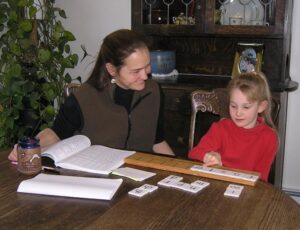
The following informal phonemic awareness evaluation simply provides you a tool to help you assess your child’s phonemic awareness. In other words, it provides an indicator of how well your child is able to recognize, distinguish, and manipulate individual sounds within words. To learn more about phonemic awareness read the article Phonemic Awareness Explained.
If this or another informal phonemic awareness evaluation indicates your child has poor phonemic awareness, you can then target instruction to develop these essential skills. For additional details and specific activities to begin developing phonemic awareness skills in your child, see the articles:
The following informal home-use quick phonemic awareness evaluation is not official diagnostic testing and will not provide precise, scientific, or medical information on your child’s hearing, vision, speech, development or other areas. If you have any concerns about your child’s hearing, vision, speech, or other physical or developmental concerns you need to have your child professionally evaluated.
Quick Informal Oral Phonemic Awareness Evaluation:
This simple phonemic awareness evaluation contains activities to indicate if the student can recognize, distinguish and manipulate sounds within words. The child does not see the printed paper; he just listens closely and responds orally. Tell the student you are going to conduct some oral ‘sound activities’ or play some ‘sound games’ to see how well he recognizes sounds. Remind the child he or she needs to listen carefully and there are not ‘wrong’ answers since you are just writing down what he or she hears. Write down the child’s exact response. For all phonemic awareness evaluation activities, be sure to demonstrate an actual example so the student understands what you are asking him to do.
HEARING, DISTINGUISHING & SEGMENTING SOUNDS WITHIN A WORD
These phonemic awareness evaluation activities indicate if the student can distinguish and separate individual sounds in a word. Does the student hear and recognize the phonetic structure of our language? Is he able to segment the individual sounds? How well can he distinguish and separate blended consonants?
Identifying/Distinguishing Beginning Sound – “Starting Sounds Game”: First, I will tell you a word and then you tell me what sound that word started with. Let me show you what I mean. If I say ‘cat’ you would tell me the sound /k/ that starts the word cat. If I say “dog” you would tell me “/d/”, If the child tells you letter names, say something like ‘yes that is the letter that the word starts with but I need the sound and give another example. Write down what the child says.
Say: “The starting sound for “sand” ? _________ (child should say sound /s/)
Say: “The starting sound for “map” ? _________ (child should say sound /m/)
Say: “The starting sound for “fast” ? _________ (child should say sound /f/)
Say: “The starting sound for “doll” ? _________ (child should say sound /d/)
Say: “The starting sound for “cut” ? _________ (child should say sound /k/)
Say: “The starting sound for “shave” ? _________ (child should say sound /sh/)
Say: “The starting sound for “test” ? _________ (child should say sound /t/)
Say: “The starting sound for “pay” ? _________ (child should say sound /p/)
(The next words have blended consonants and ARE harder for children to distinguish and separate)
Say: “The starting sound for “flash” ? _________ (child should say sound /f/)
Say: “The starting sound for “speak” ? _________ (child should say sound /s/)
Say: “The starting sound for “drop” ? _________ (child should say sound /d/)
Say: “The starting sound for “track” ? _________ (child should say sound /t/)
Say: “The starting sound for “group” ? _________ (child should say sound /g/)
Say: “The starting sound for “crash” ? _________ (child should say sound /k/)
Segmenting All Sounds in a Word – “All the sounds in the word Game”: In this next sound activity, I will tell you a word once and then you tell me all the sounds that you hear in that word. Make sure you give me the sounds separately (slight pause between sounds). Give an example so the student understands what you want him to do..If say “cat” you tell me /c/.. /a/.. /t/. (If he gives letter names, ask for the sounds) Write down exactly how the student says/segments the sounds
Say: All the sounds in “at”? ___ ___ (the child should say /a/ /t/ )
Say: All the sounds in “shut”? ___ ___ ___ (the child should say /sh/ /u/ /t/ )
Say: All the sounds in “chug”? ___ ___ ____ (the child should say /ch/ /u/ /g/ )
Say: All the sounds in “pig”? ___ ___ ___ (the child should say /p/ /i/ /g/ )
Say: All the sounds in “trip”? ___ ___ ___ ___ (the child should say /t/ /r/ /i/ /p/ )
Say: All the sounds in “drag”? ___ ___ ___ ___ (the child should say /d/ /r/ /a/ /g/ )
Say: All the sounds in “trap”? ___ ___ ___ ___ (the child should say /t/ /r/ /a/ /p/ )
Say: All the sounds in “munch”? ___ ___ ___ ___ (the child should say /m/ /u/ /n/ /ch/ )
Blending separate sounds together – “Putting Sounds Together Game” Tell the child in this activity he will need to listen closely. You will say the sounds separately and see if he can put the sounds together into the word. Always give the child an example of what you want him to do. “I will say the sounds /c/…/a/…./t/…. and you would put the separate sounds together and say /cat/.”
Say the sounds for the following words, be sure and say the sounds separately pausing between the sounds. Write down what the child says:
Say: put together the sounds: /p/.. /a/.. /n/ ____________ (the child should say ‘pan’)
Say: put together the sounds: /h/.. /i/.. /m/ ____________ (the child should say ‘him’)
Say: put together the sounds: /ch/../o/../p/ ____________ (the child should say ‘chop’)
Say: put together the sounds: /s/../w/../i/../m/ ____________ (the child should say ‘swim’)
Say: put together the sounds: /g/../r/../a/ /b/ ____________ (the child should say ‘grab’)
Say: put together the sounds: /t/../r/../i/ ../p/ ____________ (the child should say ‘trip’)
Say: put together the sounds: : /f/../l/../a/ ../sh/ ____________ (the child should say ‘flash’)
SOUND PROCESSING – SOUND MANIPULATION
Sound Manipulation – “Sound Changing Game”: These phonemic awareness evaluation activities check how well the student can distinguish and manipulate individual sounds within a word. Tell the student this is another word listening activity but this time he will make changes to the word that you ask him to. (Give an example “say cat without the /k/” “you would say “at”.)
First have your child manipulate single beginning sounds (the easiest to distinguish) – If your child has difficulty with these, end the evaluation as no need to ask child to perform harder ending sounds)
Say ‘rat’ without the /r/ __________ (the child should say ‘at’)
Say ‘mud’ without the /m/ _________ (the child should say ‘ud’)
Say ‘tap’ without the /t/ _________ (the child should say ‘ap’)
Say ‘bold’ without the /b/ _________ (the child should say ‘old’)
Say ‘chip’ without the /ch/ __________ (the child should say ‘ip’)
These manipulate beginning sounds with blended consonants that ARE more difficult to separate and distinguish
Say ‘drop’ without the /d/ __________ (the child should say ‘rop’)
Say ‘grab’ without the /g/ __________ (the child should say ‘rab’)
Say ‘step’ without the /s/ __________ (the child should say ‘tep’)
Say ‘bring’ without the /b/ __________ (the child should say ‘ring’)
Say ‘train’ without the /t/ __________ (the child should say ‘rain’)
These manipulate ending sounds.
Say ‘bat’ without the /t/ __________ (the child should say ‘ba’)
Say ‘mud’ without the /d/ __________ (the child should say ‘mu’)
Say ‘grass’ without the /s/ __________ (the child should say ‘gra’)
Say ‘room’ without the /m/ __________ (the child should say ‘roo’)
Say ‘fun’ without the /n/ __________ (the child should say ‘fu’)
These manipulate ending sounds with blended consonants (ARE harder to split out)
Say ‘lost’ without the /t/ __________ (the child should say ‘los’)
Say ‘land’ without the /d/ __________ (the child should say ‘lan’)
Say ‘lunch’ without the /ch/ __________ (the child should say ‘lun’)
Say ‘camp’ without the /p/ __________ (the child should say ‘cam’)
Say ‘wilt’ without the /t/ __________ (the child should say ‘wil’)
Results of the Phonemic Awareness Evaluation
Don’t worry if your child isn’t able to correctly complete these phonemic awareness evaluation activities. It indicates your child needs to work on developing phonemic awareness. Remember, phonological awareness is difficult for many children precisely because speech is seamless (The child seamlessly hears the word ‘cat’ as /cat/ instead of the separate sounds /c//a//t/.) You can target instruction in phonemic awareness training to effectively help your child develop phonemic awareness in hearing, distinguishing, separating and manipulating individual sounds within words.
For additional details on progression of difficulty for phonemic awareness skills (for example which sounds are easier or more difficult to distinguish) and for specific activities to begin developing phonemic awareness skills in your child, see the articles:
Reminder – phonemic awareness is only one of the multiple skills needed for reading success
Phonemic awareness is only one critical skill for reading success. Phonemic awareness training teaches your child to hear, recognize and distinguish sounds with a word. It is primarily an auditory skill and alone does not teach kids to read. An effective direct-systematic-phonics program is still the most effective way to ensure your child learns the other skills that are necessary for proficient reading. To Learn more about the effective reading instruction see Direct Systematic Phonics Instruction Proven Effective – Why Parents & Teachers Should Use Direct Systematic Phonics
Proficient reading is complex and requires mastering and integrating many different essential skills. For a visual representation outlining of necessary skills and integration of skills for correct phonologic processing of print and development of advanced skills that lead to proficient reading see Overview and Visual Representation of Overall Processes Required for Proficient Reading.
Reading is complex and requires mastering and integrating many different essential skills. For additional articles, useful information, and effective resources on teaching students to read CLICK TO EXPLORE FREE READING INFORMATION
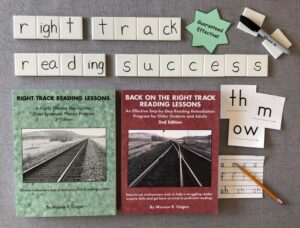
Empowering parents & teachers with information & effective resources to lead their student to reading success!
To learn more about the effective tools to help your child or student achieve reading success, CLICK TO PREVIEW EFFECTIVE RIGHT TRACK READING PROGRAMS.
This information was written by Miscese Gagen, a mother with a passion for teaching children to read proficiently by using effective methods. She is the author of the effective reading instructional programs Right Track Reading Lessons and Back on the Right Track Reading Lessons as well as a reading tutor with over 20 years’ experience successfully building proficient reading skills in her students. The purpose of this article is to empower parents and teachers with information to help their children achieve reading success. We CAN improve reading proficiency, one student at a time! More information located at www.righttrackreading.com ~ Copyright 2004-2021 Miscese R. Gagen